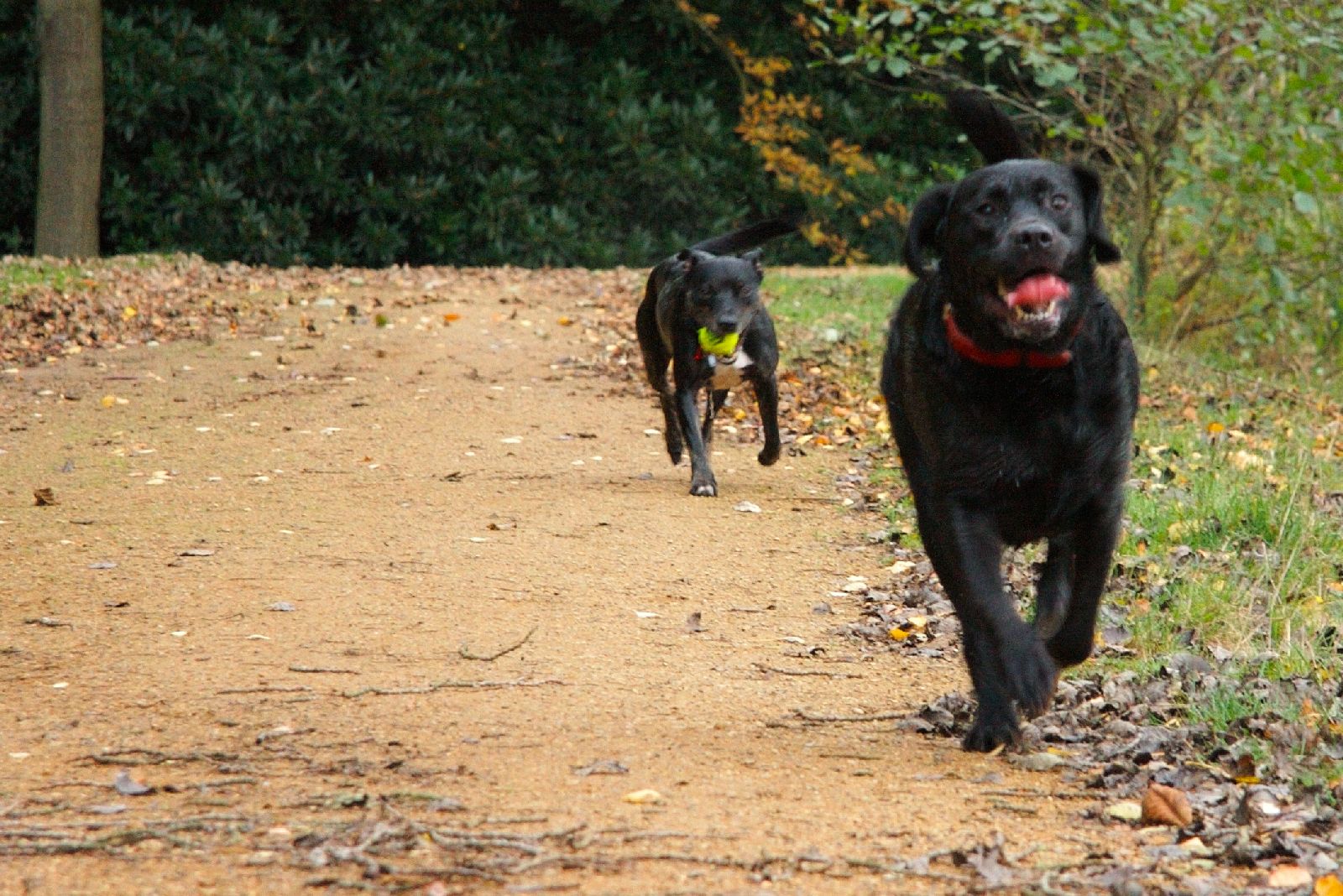
Wednesday, 23 November 2011

Staffies. They're Softer than you think

Today Battersea Dogs and Cats Home launched their Staffies. They're Softer than you think campaign, by paying a visit to Parliament, accompanied by seven Staffordshire Bull Terriers, one of which was knitted and stuffed. The knitted Staff is the face of this campaign, featuring prominently on the website and in mail-drop pamphlets (the first time I've heard of Battersea conducting mail-drops).


I mentioned the need for counter-images of Stafforshires a little while ago, and I've been thinking about it ever since. The knitted image forms part of this counter-culture, and although it's difficult to predict how effective it will be, I like it. The image was created by James North at marketing company Meteorite who have previously turned out work for the likes of Expedia, the Royal Mail and Blackberry. It's pretty clever, because it gets away from the stigmatised photographic imagery of Staffies and re-contextualises the dog, with a subtle reference back to the days when the Staff was still known as the 'Nanny dog'. Yes, it's neotenic. But it forms part of a, hopefully, larger collective of imagery that re-defines what it is to be a Staffordshire, and the more diverse we can get the better.

I was at a lecture on honey bee behaviour the other day, when the lecturer mentioned that it is almost never possible to change people's minds with words, but it is possible to change their minds with images. Let's undermine the slobbering, fearsome media Staffie, and get some more Staffordshire art out there.

Tuesday, 22 November 2011

Wickedness

Today I have been haunted by this article, about a dog who was tied to the back of a Porsche and dragged along the road until dead.

The beagle collie cross died of terrible injuries after being pulled at speeds of up to 70mph along the A27 close to Brighton, East Sussex.
Its mangled body was eventually dumped in a lay-by and the brutal motorist drove off.
Officers found the battered corpse behind a Tesco store in Brighton, East Sussex, late on Sunday night.
Detectives believe the vile episode was deliberate.
The alarm was raised at 10pm on Sunday night, when a bystander dialled 999 after seeing the black Porsche 911 Carrera towing the terrified beagle through a car park at Devil's Dyke beauty spot.
Half an hour later, police received another call to say the driver was heading along a nearby dual carriageway, with the dog, now clearly dead, still attached to the car.
Yes, the article was found on the Daily Mail website, and yes, the Daily Mail have a shonky reputation when it comes to journalistic integrity. A quick search (via everyclick.com) brought up the story on several other news sites, including the Huffington Post. Comments in response are unsurprising and fairly contiguous across the board (but I guess we have to factor in the type of person who clicks on an article like that in the first place).

This is one of the most evil things I have heard of. But labelling something as evil tends to put a preemptive stop to any further examination. So, I have to ask myself, is it possible for me to understand the motivation of someone who would do this?  Some people have a lot of empathy for nonhumans, some have very little, and most are somewhere in the middle. For whatever reason, I feel pain when I hear about the pain of other beings, particularly vulnerable ones. On an imaginary sliding empathy scale, I am close to one end of it, where most people might be somewhere in the middle. I think that being right at either end of the scale would be deeply debilitating. For those who empathise with every creature’s pain; well, we are psychologically not set up to feel everybody’s anguish as deeply as we feel our own, we simply wouldn’t be able to function. If I was right at that end, I would probably live under my desk, pressing my face into the wall and making gurgling noises. Then there are those for whom the only meaningful pain is their own; other beings (including other humans) don’t feel pain, or if they do, it is irrelevant.

Does this make these people evil? Not necessarily. There are a lot of sociopaths out there who seem to get along fine, or fine-ish. There is a difference, however, between not empthasing with others, and actively enjoying their misery and hurt. I have a feeling that the person who did this heinous thing was not actually getting his kicks from the pain of the dog; he was trying to hurt the person, or people, who loved the dog. The people who torture and kill animals for the pleasure of it do it mainly in private, secret, insidious ways. This was a public broadcast. This was a human who wanted to hurt a human, and the best way to do that was through the torture of a dog, whose interests were entirely irrelevant.
In Wickedness, Mary Midgley (1984) asks us to think of evil not as a positive, but as a negative. Not as something extra that people have, but as something that they lack.

However great may be the force of the external pressures on people, we still need to understand the way in which those people respond to the pressures. Infection can bring on fever, but only in creatures with a suitable circulatory system. Like fever, spite, resentment, envy, avarice, cruelty, meanness, hatred and the rest are themselves complex states, and they produce complex activities. Outside events may indeed bring them on, but, like other malfunctions, they would not develop if we were not prone to them. Simpler, non-social creatures are not capable of these responses and do not show them. Neither do some defective humans. Emotionally, we are capable of these vices, because we are capable of states opposite to them, namely the virtues, and these virtues would be unreal if they did not have an opposite alternative. The vices are the defects of our qualities. Our nature provides for both. If it did not, we should not be free.
Last month Steven Pinker’s The Better Angels of Our Nature was published. In it, Pinker argues (apparently extremely convincingly) that human beings are less violent now than at any other time in our history. From what I understand, Pinker’s facts come only from the analysis of human-on-human violence and I suspect that human-on-animal violence would, through sheer numbers, tell the opposite story. But surely it gives us somewhere to start...

Tuesday, 13 September 2011

In Vitro Meat

Everyone’s talking about in vitro meat, otherwise known as cultured meat, test tube meat, lab meat, or Franken-meat (I think I made that last one up all by myself, but it's probably been done)...

So what is it? Put simply, in vitro meat is meat that’s been grown on a rack, not on a living animal. Nicola Jones’ article for Nature, entitled A Taste of Things to Come ?, has a diagram which sums it up as follows. A small biopsy is taken from a live animal (let’s say, a pig). From this biopsy, cells called mysosatellite cells can be extracted. A growth serum is then added to the cells, which are applied to a rack or scaffold, where byofibres bind them together to form muscle. The rack is repeatedly stretched to build the muscle tissue and boost protein, and the resulting meat is ground into strips which can then be formed into, for example, a sausage.

Advocates of in vitro meat say that it will reduce the suffering of factory-farmed animals (one small biopsy can theoretically generate a billion pounds of meat), reduce deforestation and global warming (no need for grazing space, and less cows equals less methane), and feed the world’s poor. Critics of in vitro meat say that meat that doesn’t come from an animal is unnatural (of course, compared to what comes out of a battery farm this argument is shonky at best), that the taste of ‘real’ meat can never be replicated, and that there are already meat substitutes out there for the anaemic little vegetarians to feast upon. Interestingly, certain animal activists are also critical of in vitro meat, because of the initial process of extracting cells from a living animal, and the fact that some (but not all) of the current growth serums being used also contain animal extracts.

This puts animal advocates in a tricky position. Can saving the pain of thousands, possibly millions of farmed animals be worth the pain of hundreds, possibly thousands of farmed animals? Activist Jeff Perz has written a lengthy ‘Case Against Test Tube Meat’ centred around the premise that causing the suffering of even a single animal is unethical, and it therefore follows that the legacy of in vitro meat will be suffering and sorrow, and true animal advocates should have nothing to do with it. I’m not a utilitarian, but in this case, I would say that more suffering will be saved than will be caused, and dude, that’s about as good as we’re going to get. Plus, the biopsy is allegedly painless, and there are serums available that have no animal content whatsoever, utilising mushroom extracts instead.

People for the Ethical Treatment of Animals have a competition running for the first person who can bring in vitro chicken to market by June 30th 2012. The prize, a million dollars, is probably peanuts to the cost of actually achieving this in the first place, but it shows that by and large the activist establishment is on board.

So is this actually going to come off? There’s a minor glitch in that, due to lab regulations, none of the scientists so far have been able to taste the fruits of their labours. If they can get past that (and personally I would be happy to volunteer my taste buds, and gag reflexes, in the name of science) and get the taste right, it could be marketable. Above all, though, like everything else, this will come down to the bottom line – money. Dirty, dirty money. If they can make it cheaper than the factory farm alternative – and that’s going to take some doing – there will be a market for it.

Here, then, are my suggestions for the first products of surreptitious replacement: spam, corned beef, fish fingers, sausage rolls, chicken nuggets, chicken dippers, chicken swizzlers, ground beef pizza topping, and of course, you’ve got to have your Franken-meat frankfurters. Yum.


Saturday, 3 September 2011

Pet Photography

I’ve recently started teaching myself photography. I’ve had a DSLR for a few years now, but never managed to get off the automatic set up buttons – you know, ‘portrait’, ‘landscape’ etc. Now, I’m planning to go the full kahoney.

Why? As I mentioned before, I volunteer on Sundays at Battersea Dogs Home. A few weeks back we were told to look out for an article in the Sunday Times by a journalist who had borrowed a BDH resident Staffordshire Bull Terrier for a test day out, to find out whether the Staff would be true to media stereotype, and savage his wife and children. Anyway, like an idiot, I forgot to look out for it, and missed out.  That is, until last Friday, when I found a copy in my local Chinese takeaway (sweet and sour bean curd and steamed rice. Heaven). The lady at the takeaway said I could keep the magazine, and it’s been next to my computer every since.
The cover depicts a very middle glass gentleman, presumably the journalist, Matt Rudd, sitting neatly on a park bench, with a chunky black Staffie seating equally neatly beside him. While the man looks away into the distance, the Staff gazes straight down the lense of the camera. The picture is completely incongruous and utterly charming… without cutesy-fying the dog in question. The article that follows is even handed and sweet, with Rudd falling slowly for the soft charms of Dixie, the dog in question. But the cover picture is what stays with you long after the words have all drifted away. And this is what makes me want to be a photographer.

The Staffordshire Bull Terrier is in dire need of re-branding. Battersea and the RSPCA have tried in recent years to launch the Staffordshire into the main stream, by talking about all the wonderful qualities that Staffs have. By nature, they are loyal, warm, loving dogs. They adore people. It’s part of their problem – a Staff will do anything, anything, to please its owner… which means that there’s a lot riding on the owner’s intentions. Anyway, all the lovely qualities have been written about, spoken about. But nothing really changes. I was down walking on the meads the other day with Eggbert, and a family of four stopped to coo over him until the mum asked what breed he was (they had a toy poodle with them. The kids were dressed in identical macs. I should have known really…). When I replied that Eggie is a Staff Cross, it was literally as if I’d slapped the woman across her face. She yanked the arms of her children away from Eggie and pulled her brood from us, calling back over her shoulder ‘I don’t approve of them’.

Aside from the possible philosophical and existential interpretations of what she could have meant by not approving of a species (I don’t approve of sharks, occasionally they eat people’s arms. I don’t approve of giraffes, their necks are too long for my liking) the gist of it was that the woman had clearly not been touched by the message that the shelters are trying to put out.

A recent study conducted in the U.S (James Serpell was one of the researchers), looked at levels of aggression in particular breeds, and named the top ten most aggressive breeds, starting with the highest levels, as 1. Dachsund, 2. Chihuahua, 3. Jack Russell, 4. Australian Cattle Dog, 4. Cocker Spaniel, 6. Beagle, 7. Border Collie, 8. Pit Bull Terrier, 9. Great Dane, 10. English Springer Spaniel. If the gangsters are paying attention we should shortly see sausage dogs being paraded through the ghetto on chain leads. The point is, I don’t doubt that every different study will come out with a different top ten, but come on, Staffordshires don’t even feature. Their lookey-likey cousin the PBT comes in a meagre eighth. That’s going to be an embarrassing conversation down the dog pit next week…

I read somewhere recently that the best marketing happens when people don’t realise they are being marketed to…they just suddenly find their opinions changing, without quite knowing why. The best way to re-brand the Staffie is not to plead with people for greater understanding, it is to infiltrate society at large with counter-images to the snarling, slavering pictures that we are fed by the red top tabloids and other media outlets. Staffies have been branded as aggressive beasts, and only an intelligent, pervasive, almost insidious scheme of counter-branding is going to level the playing field. And, as much as I like words, the most powerful way to do this is through images.

Am I really advocating a snowstorm of neotenised, anthropomorphised Staffie-baby pictures? To an extent perhaps. However, I don’t think Staffies as a breed would benefit from being stuffed into Louis Vuitton handbags and fed cupcakes. We need to depict, not just the dog, but the owner too. All types of people have Staffie companions. I see them around all the time. Families with young children (in happier times the Staffie was known as the Nanny Dog), single women, pensioners, people with other breeds of dog too. Those are the pictures we need. Somebody needs to do an exhibition of Staffie and their Human photos, so that people who do not see the real Staffies trotting down their street, are still privy to another point of view. This would also have the knock-on benefit of making the Staffie not such a desirable dog for the yobs. After all, what self-respecting rude boy is going to want to man-up with a chunky Staff if he knows that the granny down the street has one.

I love Staffies. I’ve walked hundreds of them. My little old man Maxwell has a strong dose of Staffordshire in him, amongst other things. And so, to phase one of the re-branding of the Staffordshire Bull Terrier…find out what the buttons on my camera actually do.

Week 1 - Max is going to get sick of me practicing on him...


Thursday, 25 August 2011

We Don't Make Places On Our Own

I recently read Tim Cresswell’s Place: A Short Introduction (2004), and was struck by how different concepts about what makes a place can be so thoroughly and imaginatively explored, and yet never once mention non-human animals in more detail than a hand waved vaguely in the direction of ‘nature’. Yet animals were lingering silently behind all of Creswell’s main points, and I’ll give an overview below.

Places are not static; they are continuously created anew by the activities of their inhabitants.
Creswell talks about people all over the world engaging in place making activities. Unless he is using the term ‘people’ to refer not only to homo sapiens sapiens, but the peoples of the non-human races as well (and I’m thinking not), he is seriously missing a trick here. Animals are arguably more inside their environments than we are. I may sit at my desk at work for eight hours a day, but my mind is somewhere else for at least seven. As mentioned in a previous post, pretty much every animal engages more with its surroundings than do humans. Animals are constantly in the process of exploring and modifying their environments, which is part of what is so horrific about barren factory farm stalls, where they are unable to satisfy these instincts.

Place is used in the construction of ideas about who/what belongs where, and who/what does not belong
Creswell explores this idea through looking at homeless people and homosexuals. One might explore it further (in a pretty heft tome) by looking at the placement/displacement of animals. We take them out of places they belong. We put them places they don’t belong. We make judgement calls on where they can fit in and where they can’t. We create whole races, like the domestic dog, by taking a species out of one environment and making it reliant on another.

Culture transforms the natural environment
By ‘culture’ Cresswell refers specifically, of course, to human culture, i.e. positioning nature/animals outside of the sphere of cultural places. Chris Philo, in his essay Animals, Geography and the City: Notes on Inclusions and Exclusions challenges the notion of non-human animals existing outside the sphere of human culture.

…’the possibility is raised here of thinking about animals as a social group with at least some potential for what might be termed ‘transgression’ or even ‘resistance’ when wriggling out of the cages, fields and wildernesses allotted to them by their human neighbours…’(In Animal Geographies, eds Wolch & Emel, 1998).’
To dwell in a place you must understand and follow its rules
This is one of the points that Foucault makes about his Heterotopias, and similar to Henri LeFebvre’s conception of Social Space. Socially constructed places have unwritten rules, which must be followed by the inhabitants. A single species tends to understand the nuanced rules of its habitat; interlopers must pick up on these or face being seen as transgressors and trouble makers. The majority rule in most situations, except in those predominantly non-human habitats culturally constructed by humans for other species. Zoos and animal shelters are two places where animals are often seen to transgress in ‘their own’ environments. Yet they are following rules – just not ours.

Modern places are increasingly marked by a new ‘placelessness’
This again speaks to Foucault’s Heterotopias, abstract spaces which are constructed out of a collection of other spaces, for example gardens, or museums. These spaces become ‘placeless’ because they lack their own intrinsic meaningfulness.  This appears at first blush to be a specifically human construct. But what of animal collectors, such as magpies? Is the magpie’s fabled nest of appropriated items a heterotopia?

In modern society spaces are increasingly ‘consumed’ through photography, cinematography, tourism and other media.
Technologies allow and encourage the fetishisation of places. We put pictures of foreign places on our living room walls and on our screensavers. Undeniably, animals feature largely in our consumption of other places; a Serengeti scene features a herd of wildebeest, an ocean scene features seagulls. It could be said that the place is only complete, and therefore ready for consumption, when it features the animal inhabitant associated with it.

We have an irresistible urge to mark out boundaries, barriers and frontiers.
This is talked about as a fascinating human phenomenon, but this is one irresistible instinct that we share with our brothers-from-another-mothers, aka, all the other species. Take a look at Robert Ardrey’s The Territorial Imperative (1966) for an alluring insight into the ways that species mark out ‘my land’ vs ‘your land’.

Obviously, as an anthrozoologist, I see animals everywhere, present in every philosophical debate, every pop culture phenomenon. Yet, for all the intelligent and insightful piece of writing on Place: An Introduction, there is an elephant in the room, and Creswell either doesn’t see it, or doesn’t see an audience for it. It emerged this week that there are something close to 9 million individual species on our planet. To see only ourselves is not to see at all.

Animal Sensuality

A few months ago I visited an ashram named Skanda Vale, near Lampeter in Wales. Our  MA Anthrozoology group went there to talk to the resident Swamis about their relationships with the animals living at Skanda Vale, which covers an entire valley, and is home to indigenous and exotic species, including donkeys, goats, rescued poultry birds, a herd of water buffalo, and an elephant named Valli, gifted to the ashram by Sri Lanka. Although the ashram brands itself as a ‘multi-faith community’, the main precepts that it is run by are Hindu in origin, and consequently it is a place of pilgrimage for Hindus from across the globe. Within Britain, Skanda Vale is most commonly known through the media coverage surrounding the killing of the bull Shambo. In 2007 Shambo was diagnosed with bovine TB, and the Swamis and other human residents of the ashram entered into a long and bitter dispute with Defra regarding Shambo’s fate. Despite Skanda Vale arguing that Shambo was sacred to them, Defra prevailed, and Shambo was destroyed.
We were forewarned that the episode with Shambo was still raw in people’s minds, and the topic wasn’t raised. Instead, the swamis spoke in a more general way about their respect for the animals that they share their lives with, with many of them devoted sole carers for a particular species living at the ashram, spending almost all their waking hours caring for their charges. One swami happened to mention that caring for the resident herd of water buffalo was a good way for him to practice mindfulness.

This mindfulness idea has been popping into my head ever since the ashram visit. The aim of mindfulness is to be able to dwell completely inside the present moment, with no thought of the past or of the future. It’s considered a holy state to be in for many religions. I’ve tried it. It’s really, really hard to sustain for longer than a few moments. But somehow its always easier with animals around. For a couple of years now I’ve been walking Battersea Dogs Home’s canine residents every Sunday, and I think I understand how the swami is aided by his buffalo companions. It’s a tired old cliché that animals live in the moment, but that tired old cliché is true. And you can’t help living there with them.

It’s August. It hasn’t been a summer to write home about, but we’ve had a few idyllic blue sky days, and today was one of them. With sheer, exultant joy, a six stone Husky, (who up until now has been the very picture of aloof poise) launches himself into the cool waters of a paddling pool. The split-your-face grin of a fat little Staffie bitch as she collapses belly-first into a patch of moist green grass and clover, and splays her little legs behind her like a frog, is one of the sweetest things I’ve ever seen. In my capacity as dog walker, I spend all winter wishing it was summer, and all summer dreading winter. When have I ever just engaged with my surroundings the way that these dogs do? They have the mindfulness of a Buddha (if not the calmness), and it takes no effort at all.


In the lushly written The Spell of The Sensuous (1996) ecologist David Abram advocates the deeply mindful use of all our senses in regaining a connection with nature and our surroundings, as a way of reminding ourselves what we have to lose, before it is too late.

Without the oxygenating breath of the forests, without the clutch of gravity and the tumbled magic of river rapids, we have no distance from our technologies, no way of assessing their limitations, no way to keep ourselves from turning into them…Caught up in a mass of abstractions, our attention hypnotized by a host of human-made technologies that only reflect us back to ourselves, it is all too easy for us to forget our carnal inherence in a more-than-human matrix of sensations and sensibilities. Our bodies have formed themselves in delicate reciprocity with the manifold textures, sounds and shapes of an animate earth – our eyes have evolved in subtle interaction with other eyes, as our ears are attuned by their very structure to the howling of wolves and the honking of geese. To shut ourselves off from these other voices, to continue by our lifestyles to condemn these other sensibilities to the oblivion of extinction, is to rob our own senses of their integrity, and to rob our minds of their coherence. We are human only in contact, and conviviality, with what is not human (Abram, 1996, my italics).
Abram’s frequent use throughout the book of technology as a counterpoint to sensuality can’t help but hark back to Andrew Feenberg’s work on the Philosophy of Technology, and the Determinist viewpoint that technology, rather than being human controlled, is in fact, controlling us. The new awareness that allowing ourselves to experience the ‘spell’ of sensuality can awaken in us, just might be enough to break the ‘spell’ of technology, that we are currently (considered to be) under.

Animals make us mindful, and not just in a vicarious way, but in a deeply sensual way too. As Abram points out, we have evolved to be tuned into them. Think about the sound that crickets make on a summer evening, or of a bee buzzing past your ear. The way that warm dog fur feels on your palm, the way it smells.  The sight of a glossy, red ladybird against a green leaf. The easiest way for us to spread our awareness into our surroundings is for those surroundings to have animals in them. Sure, cars could work too. The sound of engines revving. The taste of smog-air in your mouth. It’s no wonder we’ve retreated into personal space bubbles with sensory stimulation like that on offer. And, as Feenberg points out, man-made things simply reflect us back at ourselves. There is no sensory journey to compare to that of experiencing another being as it experiences us, and engages with its surroundings.

It’s strange to think that we might be able to save the future by thinking simply about the present… if only for a little while.


Sunday, 7 August 2011

Suckling the Witch's Familiar

Medieval Britons, and those even as recent as 18th century Britons, saw witchcraft everywhere. The witches in question, although sometimes male and occasionally of the ruling elite, most often came in the form of rural village women, and were most often accused by their own neighbours. Interestingly, in the brilliantly titled Malevolent Nurture (1995), Deborah Willis finds that the accusers, too, were mainly females; the neighbours of the indicted.


Proof of witchcraft came in the form of muttered so-called ‘curses’ followed by the target of the curse experiencing some sort of ill fortune; failed crops, a sow that wouldn’t feed her piglets, even a death. The other form of proof came in the testimony of those who had seen the accused with a small animal, or animals. The accuser might have seen the ‘witch’ leaving food out for a dog or tending to an injured bird. She might even be known to house animals in her cottage overnight.
It was common knowledge that a witch would have a familiar, and indeed there are numerous testimonies from self-confessed witches (although the methods of torture used in order to glean a confession could be brutal, and it’s hard to pinpoint who truthfully considered themselves a witch) regarding their species and special names. Depending on the time and locality, this familiar was alternately seen as a demon that did the witch’s bidding, or the devil himself, guiding and instructing the witch whilst in the guise of an animal. The animal in question, then, was not considered to be an ‘evil animal’ per se, rather, it was seen as a vessel, a container for the demonic spirit within. Animals were non-reasoning beings and did not have the capacity to be evil in and of themselves.

Once the accused was brought before trial there was one surefire way to determine whether she was a witch or not. This was the Devil’s Teat. A mark on the witch’s body, which could look like anything from an actual third nipple, to a scar, birthmark or mole, and with which it was said that the witch was able to suckle her familiar, either with milk (which was believed to be generated from blood) or with blood itself. Once the mark was found (and it inevitably was, a woman would have to be impossibly blemish free to escape) it was considered solid evidence of the witch’s maleficium.

Having taken the suspected witch, she is placed in the middle of a room upon a stool or table, cross legged, or in some other uneasy posture, to which if she submits not, she is then bound with cords; there she is watched and kept without meat or sleep for the space of 24 hours for (they say) within that time they shall see her imp come and suck. A little hole is likewise made in the door for the imp to come in at; and lest it might come in some less discernable shape, they that watch are taught to be ever and anon sweeping the room, and if they see any spiders or flies, to kill them. And if they cannot kill them, then they may be sure they are her imps. (John Gaul, Select Cases of Conscience touching Witches and Witchcrafts, 1646)
In Malevolent Nurture Willis borrows heavily from the work of Melanie Klein to demonstrate how women who were often past the child-bearing age, either widowed or spinsters, and who might be poor and forced to ask other neighbours for help or charity, were prime targets for the accusation of witchcraft. Their muttered ‘curses’ were frequently a response to neighbours telling them essentially to get lost when they asked for help. In psychoanalytic terms the neighbour, often younger than the accused, who had rebuffed the plea for charity can be seen to identify the older woman’s helplessness as a lack of maternal grace and dignity. In psychoanalysis every older woman represents ‘the mother’, and therefore, when ‘the mother’ is seen to plead for help ‘the child’ is put in an uncomfortable, guilt-inducing position.
Willis is strongly into the psychoanalytic interpretation of the patterns of these events, which may or may not apply to these cases. If we allow for this train of thought though, it could arguably be said to follow on that the disgruntled neighbour, seeing the poor old woman nurturing or caring for a small animal, considers this a perverse enough action to be an indicator of more sinister forces at work.

  1. The old (or old-er) woman can barely afford to keep herself
  2. The older woman might have often asked for charity for herself
  3. The older woman is seen caring for a dumb animal
  4. There must be a reason for the old woman to want to care for the animal.

There must be a reason for the old woman to want to care for the animal. It was not understood that an old woman might try to fulfil her urge to nurture with the only thing that she was able to help – a small animal. It was not seen that the old woman, often maligned within her community, might feel a sense of appreciation from the rabbit, or the dog, or the sparrow that she helped. The only explanation for a woman to be taking the time to care for something small, vulnerable, and distinctly non-human, was that the animal was not an animal at all.


Strikingly, despite the Europe-wide belief in witches, the notion of the ‘sucking familiar’ is actually geographically limited to England (see M.A. Murray, Witches’ Familiars in England). How the transgression of feeding an animal with some bread or a bowl of milk could become, in people’s minds, all the more deviant with the idea of the actual suckling of the animal on the witch’s own flesh, shows us the deep sense of threat felt by those (i.e. the majority) who could not conceive of a relationship between a human and an animal. Understanding this viewpoint requires a deeper investigation into the more general attitudes towards animals of the time.